mTLS vs TLS: What's the Difference?
mTLS vs TLS: What's the Difference?
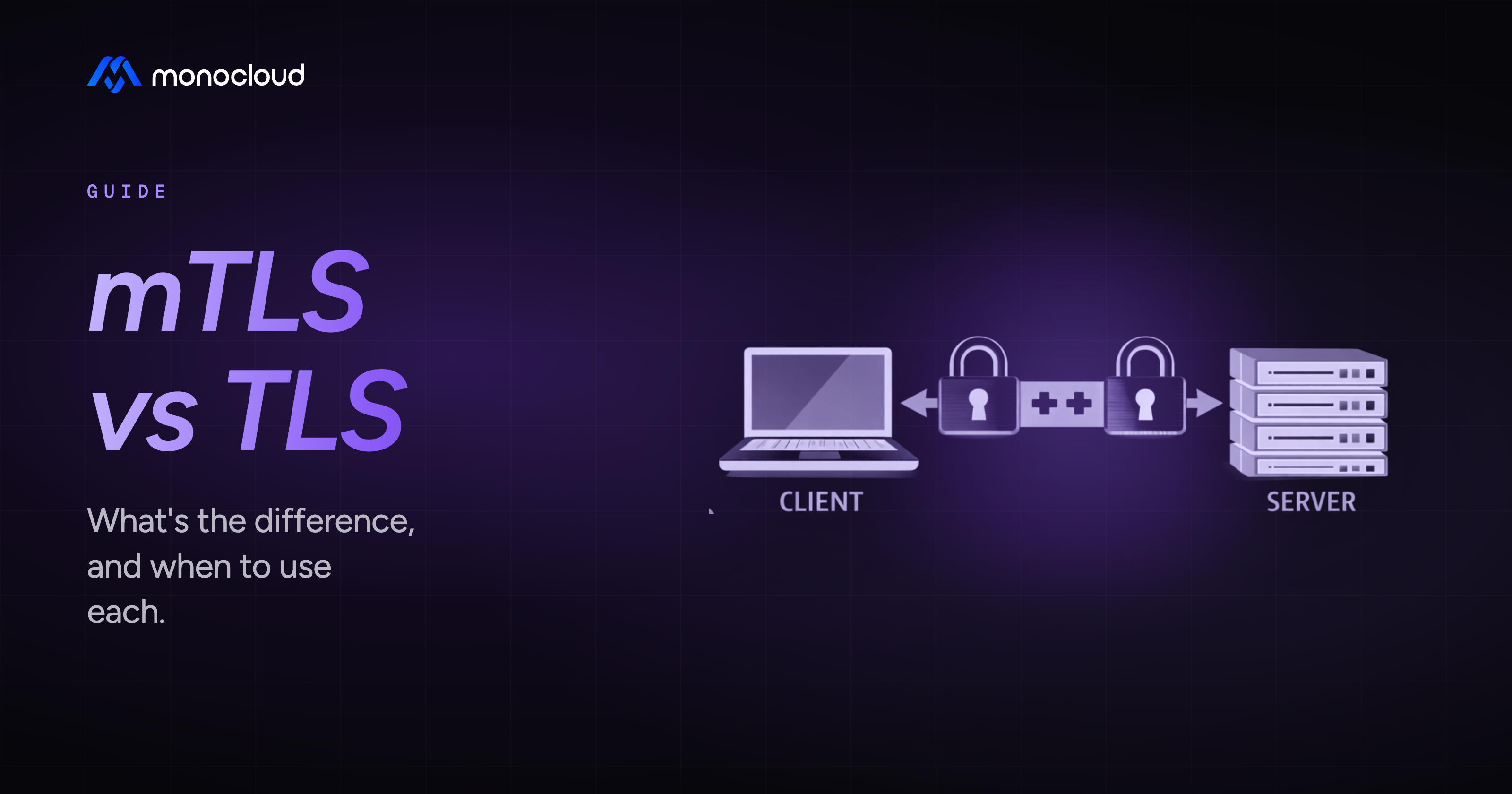
mTLS vs TLS comes down to how many parties get authenticated. TLS proves the server's identity to the client and encrypts the connection. mTLS does all of that and adds the reverse check, the server also verifies the client's certificate, so both ends are cryptographically identified. mTLS is not a separate protocol, it is TLS with client-certificate authentication turned on.
That one difference decides where each belongs. TLS is what secures the public web, where the client stays anonymous at the connection layer. mTLS is what secures machine-to-machine traffic, where you want to know exactly which service, device, or agent is calling. This guide defines each, puts them side by side, and shows when to reach for which.
What is TLS?
TLS, Transport Layer Security, encrypts a connection and authenticates the server to the client. When your browser opens an HTTPS site, the server presents a certificate, the browser checks that it chains to a trusted certificate authority, and an encrypted channel is set up. The client is not identified at the TLS layer, it stays anonymous there and proves who it is later through something else, like a password or a token. The current version, TLS 1.3, is defined in RFC 8446.
What is mTLS?
mTLS, mutual TLS, is TLS with both sides authenticated. The server still presents its certificate, and it also requests one from the client. The client presents its own certificate and proves it holds the matching private key, and each side verifies the other against the certificate authorities it trusts. The result is a connection where both ends are proven before any application data flows. Client authentication is an optional, built-in part of the TLS handshake, which is why mTLS needs no separate protocol. For the full walkthrough, see What Is mTLS?.
mTLS vs TLS: a side-by-side
The two are easiest to hold apart by what each authenticates and where it runs.
| Property | TLS | mTLS |
|---|---|---|
| Who is authenticated | The server only | Both the client and the server |
| Client identity at the TLS layer | Anonymous | Verified by certificate |
| Certificates required | Server certificate | Server certificate and client certificate |
| Typical use | Public websites, user-facing HTTPS | Service-to-service, zero-trust, partner APIs, agents |
| Client credential management | None at the TLS layer | PKI to issue, rotate, and revoke client certificates |
| Encryption | Yes | Yes |
| Relationship | The base protocol | TLS with client authentication enabled |
When should you use TLS vs mTLS?
Use plain TLS for anything public and user-facing. A browser visitor should not need a client certificate, so the server is authenticated, the channel is encrypted, and the person proves who they are afterward with a login. Adding mTLS there would mean issuing a certificate to every user's device, which is painful and worse than passwordless options like passkeys.
Use mTLS when the caller is a machine and you want it cryptographically identified: internal service-to-service traffic, zero-trust networks and service meshes, partner API integrations, IoT and device fleets, and AI agents or workloads calling your systems without a human present. The rule of thumb is simple: TLS for people, mTLS for machines.
Do you need mTLS if you already use TLS?
Not for your public traffic, and the two are not an either-or. Most real systems run both: plain TLS at the public edge where users connect, and mTLS on the internal and partner paths where services talk to each other. mTLS is additive, it hardens the machine-to-machine links without changing how human users sign in.
mTLS also unlocks something TLS alone cannot: certificate-bound access tokens. Standardized in RFC 8705, these tie an OAuth access token to the client's certificate, so a stolen token cannot be replayed from a different client. That is the difference between authenticating who you are and stopping token theft, which is why teams building zero-trust reach for mTLS on top of the TLS they already run.
How does MonoCloud add mTLS on top of TLS?
MonoCloud provides the mTLS layer for your machine, workload, and agent traffic, built on the OAuth 2.0 Mutual-TLS standard (RFC 8705). Clients authenticate with a certificate and receive certificate-bound access tokens, so a token only works for the client holding the matching certificate. You bring your own PKI as the truststore, using AWS Private CA, Google Cloud, HashiCorp Vault, a SPIRE trust bundle for SPIFFE workloads, or your own online or offline CA, and revocation runs centrally through CRLs, live OCSP, and deny lists. Because access policy is evaluated when the token is issued, whether a valid client certificate was presented can itself be a condition on access, which is covered in What Are Cedar Policies?. See the MonoCloud mTLS page, or start building for free.
Frequently asked questions
What is the difference between TLS and mTLS?
TLS authenticates one party, the server, and encrypts the connection, leaving the client anonymous at the connection layer. mTLS authenticates both parties: the server also requests and verifies the client's certificate, so both ends are cryptographically identified before any data flows. mTLS is TLS with client-certificate authentication enabled, not a separate protocol.
Is mTLS more secure than TLS?
For machine-to-machine traffic, yes, because it removes the anonymous client. Both encrypt the connection equally, but mTLS also proves which client is calling, which stops an unknown or spoofed service from connecting. For public user-facing sites, plain TLS is the right choice, since issuing a certificate to every visitor is impractical.
Do I need mTLS if I already use TLS?
Not for public user traffic. The two are additive, not either-or. Most systems run plain TLS at the public edge where users connect, and mTLS on internal and partner paths where services talk to each other. mTLS hardens machine-to-machine links without changing how people sign in.
When should I use mTLS instead of TLS?
Use mTLS when the caller is a machine you want cryptographically identified: service-to-service traffic, zero-trust networks, partner APIs, IoT and device fleets, and AI agents or workloads. Use plain TLS for public, user-facing connections where a person authenticates afterward with a login.
Is mTLS a different protocol from TLS?
No. mTLS is standard TLS with the optional client-authentication step turned on. The server requests a certificate from the client during the same handshake, so no separate protocol or software stack is required, only client certificates and a truststore to verify them.